Josif Maksimovitch Landowsky - Red Symphony (1968)


Info


Dr. Landowsky was a Russianized Pole and lived in Russia. His father, a Colonel of the Russian Imperial Army, was shot by the Bolsheviks during the 1917 revolution. The life-story of Dr. Landowsky is astonishing. He finished the Faculty of Medicine in Russia before the revolution and then studied two years at the Sorbonne in Paris, and he spoke fluent French. He was interested in the effects of drugs on the human organism, to help surgeons in operations. Being a talented doctor, he carried out experiments in this field and had achieved considerable results. The all-seeing NKVD (secret police) became interested in these works and easily discovered the real author. His specialty was very valuable for them. One day in 1936 there was a knock at the doctor's door. He was invited to follow, and he was never again allowed to rejoin his family. He was placed in the building of the chemical laboratory of the NKVD near Moscow. He lived there and was forced to carry out various jobs given to him by his masters, he was a witness at questionings, tortures and the most terrible happenings and crimes. This book is an exact recorded report of the questioning of the former Ambassador in France, C.G. Rakovsky during the period of the trials of the Trotskyists in the USSR in 1938, when he was tried together with Bukharin, Rykoff, Yagoda, Karakhan, Dr. Levin and others. The questioning took place in French by this agent. The doctor was present in order to put drug pills unnoticed into the glass of Rakovsky, to induce energy and a good mood. Behind the wall the conversation was registered on apparatus, and the technician who operated it did not understand French. Then Dr. Landowsky had to translate into Russian, with two copies, for Stalin and Gabriel. Secretly he dared to make a carbon copy, which he hid anyway.


Correa Moylan Walsh - Climax of civilisation (1917)


Info


Standing by itself, the present work is offered as a new exposition of the cyclical theory in the philosophy of history. It attempts to describe the course which all civilizations naturally run, and to locate our position in the cycle of our civilization. This position is shown to be one near the top, or climax, and to contain premonitions of dis- integration and decline. The purpose of the work is to point out these germs of decay, and to emphasize the need of guarding against fomenting and cherishing them.


Herman Kahn - World Economic Development (1979)


Description


This book examines the prospects for world economic development. It focuses primarily on the period from 1978 to 2000 and pays particular attention to the earlier part of that interval. The book examines some of the more immediate problems and issues associated with the process of economic growth.


Hazel Henderson - The Politics of the Solar Age (1981)


Abstract


We are now at a critical moment in history. The stresses now occurring globally are largely due to limited perspectives, ancient ideologies, and defunct economic models. Yet, 2015 can be the year when the great transitions envisioned and promoted by forward-looking individuals and groups in many places around the world can be truly launched in academia, public, private, and civic sectors worldwide. These transitions show that stress is evolution’s tool and that breakdowns do drive breakthroughs! This article reviews the progress achieved to date and outlines the reasons for optimism that humanity is on the brink of achieving the long-wished-for goal of universal, equitable, and sustainable prosperity.


Klaus Schwab and Pamela Hartigan - Social Innovators with a Business Case: Facing 21st Century Challenges One Market at a Time (2006)


Intro


If there is one thing about which public and corporate leaders around the world today can agree, it is the ever-growing importance of innovation. The search for innovative solutions to the world’s myriad local, national and global challenges has become a clarion call rallying people across multiple borders defined by nation, industry, and academic discipline. Yet policy making reflects deep ambivalence about innovation. The cheerleading over innovation exists in contrast to the myr- iad institutional, legal, regulatory, and educational impediments to the work of innovators.


William Y. Elliott & Neil A. McDonald - Western political heritage (1949)


Info


Includes The Dawn Of Political Consciousness; Political Life In The Greek City State; Plato's Philosophy Of The Ideal State And Of Law; The Nature Of Political Society, Aristotle; The Heritage Of Roman Law; The To Swords; Government In The Middle Ages; The Protestant Revolt And Its Political Effects; The Secular National State; Natural Rights And A Limited State; Revolutionary Popular Sovereignty And Conservatism; Nineteenth-Century Liberalism, British And American; Foundations Of Totalitarianism, Marxism; The Democratic Constitutional State; Toward A Constitutional World Order.


Marshall Mcluhan - Radio: The Tribal Drum (1964)


Abstract


Editor's Note: This article is a chapter from Mr. McLuhan's forthcoming book, Understanding Media, slightly revised for publication in AVCR. It deals with the neglected medium of radio and interprets
radio in terms of the inherent communication content of the medium as such. Mr. McLuhan' s major thesis is that the medium is the message. The interpretation of media as unique and intrinsic messages per se parallels and complements the thesis of Edward T. Hall (The Silent Language, Doubleday and Co., I959) that culture is communication and expands and clarifies Sigmund Freud's maxim (Civilization and its Discontents, W. W. Norton & Co., I962) that all media are extensions of the human sensorium. One of the discomforting characteristics of Mr. McLuhan' s writings is that they require the reader to think for himself. The following article on radio as a message--a tribal message---incorporates this requirement and its attendant discomfort.-- C. F. Hoban.


John Coleman - The Tavistock Institute of Human Relations (2006)


Info


The Tavistock Institute for Human Relations has had a profound effect on the moral, spiritual, cultural, political and economic policies of the United States of America and Great Britain. It has been in the front line of the attack on the U.S. Constitution and State Constitutions. No group did more to propagandize the U.S. to participate in WWI at a time when the majority of the American people were opposed to it.

Much the same tactics were used by the Social Science Scientists at Tavistock to get the United States into WWII, Korea, Vietnam, Serbia and both wars against Iraq. Tavistock began as a propaganda creating and disseminating organization at Wellington House in London in the run-up to WWI, what Toynbee called “that black hole of disinformation.” On another occasion, Toynbee called Wellington House “a lie factory.”

From a somewhat crude beginning, Wellington House evolved into the Tavistock Institute and went on to shape the destiny of Germany, Russia, Britain and the United States in a highly controversial manner. The people of these nations were unaware that they were being “brainwashed.” The origin of “mind control,” “inner directional conditioning” and mass “brainwashing” is explained in an easy to understand book written with great authority.


Jonas Salk - Man Unfolding (1972)


Info


Salk's first book speculates on the course of humanity's metabiological evolution and suggests that our modern biological knowledge "can be extended and applied to some of the vital social, psychological and ethical problems we face". 


Ervin László - Cybernetics in an evolving social system (1984)


Abstract

Human societies can be conceptualized as natural systems satisfying four basic system criteria: Ordered wholeness; negative feedback deviation‐reducing capability; positive feedback deviation‐amplifying, self‐evolving capacity; and dual‐structural adaptation to sub‐ as well as suprasystems. While societies are obviously governable in stable, relatively organized situations, whether in totalitarian or fully participatory ways, it is concluded they are also governable during “crucial epochs” that are characterized by unstable, provisionally disorganized and unpredictable states—although different modes of governance prevail during these periods of rapid self‐evolution, when control is exercised by rapidly shifting and selectively amplifying peripheral movements. Analysis of the forms of transition governance during crucial epochs in self‐evolving social systems is important for suppressing totalitarian trends and consciously amplifying humanistic peripheral movements.


Club of Rome 

In 1993, in response to his experience with the Club of Rome, he founded the Club of Budapest to, in his words, "centre attention on the evolution of human values and consciousness as the crucial factors in changing course — from a race towards degradation, polarization and disaster to a rethinking of values and priorities so as to navigate today's transformation in the direction of humanism, ethics and global sustainability".


Walter Bowart - Operation Mind Control (1978)


Info


Operation Mind Control - The CIA - The Making and Unmaking of a KILLER! This is the most terrifying true story ever to emerge from the united states. Walter Bowart has uncovered a huge government cryptocracy dedicated to controlling and manipulating human minds. Through hypnosis and drugs, ordinary citizens became CIA zombies, human computers, spies, trained assassins, with no control over their consciousness or consciousness of their actions. Only unexplained memory gaps, or a separate personality which emerged on a trigger cue, showed the victim that something else was amiss. Bowart's devastating account includes top secret documents cold-bloodedly outlining the cryptocracy's program, and startling new evidence to link Lee Harvey Oswald, James Earl Ray, and Sirhan Sirhan with Operation Mind Control. In the Manchurian Candidate that was fiction - OPERATION MIND CONTROL IS CHILLING FACT! 


Aldous Huxley - History of Tension (1957)


Intro


Mr. Huxley is a distinguished British journalist and novelist. This article is based on an address given at the Conference on Meprobamate and Other Agents Used in Mental Disturbances at the New York Academy of Sciences, 18 Oct. 1956. It is reprinted here by Permission from the monograph Meprobamate and Other Agents Used in Mental Disturbances.


J. D. Bernal - The World, The Flesh And The Devil: An Enquiry into the Future of the Three Enemies of the Rational Soul (1929)


Info


Written by the pioneering scientist, theorist and activist J. D. Bernal, this futuristic essay explores the radical changes to human bodies and intelligence that science may bring about, and suggests the impact of these developments on society. Bernal presents a far-reaching vision of the future that encompasses space research and colonization, material sciences, genetic engineering, and the technological hive mind. In his view, it will be possible for the conditions of civilization to reach a state of materialist utopia. For all three realms—the world, the flesh, and the devil—Bernal attempted to map out the utmost limit of technoscientific progress, and found that there are almost no limits.


UK Driver & Vehicle Standards Agency - DVSA’s vision to 2030 (2023)


Foreword


We’re delighted to share with you our vision to 2030. It sets out what we must do to make transport safer, greener and healthier. It’s also an invitation to you – our customers, our people and our partners – to join us on this journey. The economy, the environment and health are high priorities, and our relationships with you are vital to success.


Robert Lomas - Freemasonry and the birth of modern science (2003)


Info


Looks at the formation of the Royal Society and the man who was the driving force behind it; Sir Robert Moray.


Jørgen Randers - How to Stop Industrial Growth With Minimal Pain (1978)


Abstract


In order to reach material equilibrium in the economy, one must be able to control the total production volume of industrial sectors. The paper discusses three ways of stabilizing the size of an industrial sector. The no-nonsense appraoch entails direct regulation of the capacity of industrial plants. The manipulative approach softens the negative employment effects of direct regulation through a subsidy scheme. The enlightened public approach implies reduced material standards, as does the manipulative approach, but insures stable employment even at constant sector output.


Jørgen Randers (born 22 May 1945) is a Norwegian academic, professor emeritus of climate strategy at the BI Norwegian Business School, and practitioner in the field of future studies. His professional field encompasses model-based futures studies, scenario analysis, system dynamics, sustainability, climate, energy and ecological economics. He is also a full member of the Club of Rome, a company director, member of various not-for-profit boards, business consultant on global sustainability matters and author. His publications include the seminal work The Limits to Growth (co-author), and Reinventing Prosperity. 


Cultural Creation in Modern Society - Lucien Goldmann - Google Books


Goldmann Lucien - Cultural Creation in Modern Society (1971)


Info


Herman Kahn - What will life be like in the year 2000? (1973)


Introduction


Would you like to know how the majority of Americans like their sex? Or what the yearly per capita income for the average Indian peasant is? Or when, if ever, the world’s energy supply will reach a critical low? Or why Japan is destined to exercise hegemony over the eastern half of the globe in the decades to come?


If so, Herman Kahn is the man to talk to. He could provide you, not only with the factual data to support his answers, but, if you so wished, could even interrelate all of those seemingly disparate questions into one, sweeping, meaningful projection — possibly the survival potential for the Judeo-Christian ethic in Western Europe for the next thirty years.


Jacques Attali - A huge financial crisis is looming (April, 2023)


Intro


A huge fnancial crisis is looming. Unless we act quickly, it will strike, probably in the summer of 2023. And if, through general procrastination, it is postponed, it will only be more severe later. We still have everything we need to really overcome it, provided we understand that our entire development model is at stake.


John B. Calhoun - Death Squared The Explosive Growth and Demise of a Mouse Population (1973)


Info


John Calhoun’s colony was a mouse utopia—a giant pen with everything a mouse could ever desire: plenty of food and water, a perfect climate, and reams of paper to make cozy nests. But the thing is, this wasn’t the first rodent heaven that Calhoun built. And by this point, he knew not to expect a happy ending. Because he also knew just how quickly mouse heaven can deteriorate into mouse hell.


James E. Pitt - Adventures In Brotherhood (1955)


Foreword


"A great deal of good can be done in this world if you do not care who gets the credit/'
 

The sense of mission suggested in those words perhaps conies closer than any other single sentence could in expressing the reason why the National Conference of Christians and Jews has become a tremendous force for brotherhood in American life. It is for this reason, too, that it seemed especially worthwhile to undertake this effort to assess the impact and influence during the past quarter century of this oldest and largest agency dedicated to the improvement of human relations. Millions of Americans know NCCJ'S name and have participated in its many and varied activities. But because the Conference has gone about its task of attacking the virus of hate and bigotry quietly and without fanfare, comparatively few people are aware of the scope and effectiveness of its endeavors. It would, in fact, take several volumes simply to list the vast number of thoughtful citizens who have given of their time and money to help make the Conference goal of the brotherhood of man under the Fatherhood of God a reality. There are many richly deserving of credit whose names and accomplishments are not recorded here because of the limitations of a work of this nature.


Bill Joy - Why the Future Doesn't Need Us (2000)


Preface


Our most powerful 21st-century technologies—robotics, genetic engineering, and nanotech—are threatening to make humans an endangered species.


Herman Kahn & Irwin Mann - Ten common pitfalls (1957)


Info (RAND)


A draft of a chapter of a proposed book on military planning in an uncertain world. The present study identifies and discusses some of the common mistakes made by operations analysts and systems analysts. The authors summarize such pitfalls as modelism, statistical and real uncertainties, overconcentration, phasing, overambition, fanaticism, and hermitism.


RAND (Security 2040) - Brain Computer Interfaces (2020)


Summary


Brain-computer interface (BCI) represents an emerging and potentially disruptive area of technology that, to date, has received minimal public discussion in the defense and national security policy communities.
This research considered key areas in which future BCI technologies might be relevant for the warfighters of tomorrow. It sought to explore the operational value of current and future developments regarding man-machine neural communication, the associated vulnerabilities and risks, and the policy levers that should be in place before the technology is deployed.


Hans J. Morgenthau - War With China? (1965)


Info


Professor Morgenthau is one of the most eminent critics of American foreign policy today. Here he suggests that the United States is on the verge of embracing a policy in Vietnam which will lead either to humiliating defeat or to a much wider war.

Reprinted from The New Republic,
© 1965, Harrison-Blaine of New Jersey, Inc.


Hamid Khan - Critical study of propaganda & hybrid / 5th generation war for the purpose of narrative building (2021)


Abstract


Undoubtedly this 21st century is the century of peak of modern sciences and media war. With every passing day the concept of conventional war is getting obsolete. In modern methodology war rooms are actually consists of super computers spreading information of your choice whether factual or not. In fact it’s all based on narrative building and changing public perception. We have seen in recent history how media was used/misused to achieve desired results in narrative building across the world.
 

In this thesis I have tried to research the effectiveness of Propaganda on global level. How different countries have actively used tools of Hybrid war or may also be called 5th generation war to achieve geo political and strategic targets. Despite of knowing the consequences and catastrophic damages of such propaganda. In most cases it resulted in mass losses of human lives and complete destruction of Infrastructures. While in some cases it started wars between countries (Yemen & Saudi Arabia, Ukraine & Russia) and others. Also hybrid war brought many nations on brink of big conventional wars like Pakistan & India, and Standoff between China & India. Even in some cases it could have caused Nuclear wars between two countries for example North Korea & USA, Pakistan & India.
 

As case study I have studied Iraq war (US & NATO Invasion) which was legitimized by United Nations approved on reports about presence of Weapon of Mass Destructions (WMD’s). Which was later proven all false and all reports , Media reports , documents everything was proven fabricated to build certain narrative to mislead the entire 170+ Member Nations of the world in UNO. Hence it’s not only one of the most recent and classic example of White Propaganda. This might be considered as biggest successful propaganda campaign of 20th century which resulted into millions of Iraqis undue massacre, A complete destruction of oil rich economically stable country which caused loss of trillions of dollars and complete infrastructure demolition.


Furthermore in this thesis I have discussed fatal impacts of false propaganda, types of propaganda. Importance of knowing and countering propaganda and hybrid war tools to secure national interest. A chapter of thesis explains how a state can use propaganda for multiple uses to divert attentions from its failures and achieving success in certain narrative building.


A brief critical study of Strategic affairs based on media warfare is also part of this thesis. Every state desire to secure its strategic interests, which type of methodologies being used in modern day policy making of strategic affairs is also a part of this research. There’s no doubt every country like to achieve best for its strategic interests but what kind of illegal, unethical, unlawful, inhumane & ill methods are used as state agenda is also discussed. Since our planet is already facing many challenges of its destruction ( environmental issues, Covid-19 Type Pandemics & others ) than why this risk of world war , nuclear wars due to illness of controlling or conquering the world. All that is happening on the name of strategic interests.


Maurice Strong - Managing for Global Survival (1988)


About Maurice Strong


Maurice Frederick Strong, PC, CC, OM, FRSC, FRAIC (April 29, 1929 – November 27, 2015) was a Canadian oil and mineral businessman and a diplomat who served as Under-Secretary-General of the United Nations.

Strong had his start as an entrepreneur in the Alberta oil patch and was President of Power Corporation of Canada until 1966. In the early 1970s he was Secretary General of the United Nations Conference on the Human Environment and then became the first executive director of the United Nations Environment Programme. He returned to Canada to become Chief Executive Officer of Petro-Canada from 1976 to 1978. He headed Ontario Hydro, one of North America's largest power utilities, was national president and chairman of the Extension Committee of the World Alliance of YMCAs, and headed American Water Development Incorporated. He served as a commissioner of the World Commission on Environment and Development in 1986 and was recognised by the International Union for Conservation of Nature as a leader in the international environmental movement.

He was President of the Council of the University for Peace from 1998 to 2006. More recently Strong was an active honorary professor at Peking University and honorary chairman of its Environmental Foundation. He was chairman of the advisory board for the Institute for Research on Security and Sustainability for Northeast Asia. He died at the age of 86 in 2015.


David C. Glass - Biology and Behavior Genetics (1968)


Preface


Contemporary social scientists no longer adhere to a simplistic environmental determinism, just as contemporary biologists no longer embrace a genetic determinism. In both fields there is increasing recognition of the importance of an interaction between the organism and the environment. Neither the genetic parameter nor the environmental parameter alone can account for more than a portion of behavioral variability. With the development of this interactional approach, a revitalized interest in the genetic basis of social behavior has been witnessed. On November 18-19, 1966, Russell Sage Foundation and The Rockefeller University, in collaboration with the Social Science Research Council, sponsored a conference on genetics and behavior in Caspary Auditorium on the Rockefeller campus in New York City. The organization of the meeting was guided by the premise that recent advances in genetics portend serious social, ethical, and legal consequences. It is important that both biological and social scientists study these consequences. Social scientists, in particular, are equipped by training and are implicitly committed to make substantial contributions in this area. However, they often lack the knowledge of behavior genetics necessary for sophisticated analysis of the social consequences of new knowledge resulting from research on genetics. The specialist in genetics, on the other hand, often lacks the interest or skill necessary for examination of the broad implications of this research. The purpose of the conference was to enable participants drawn from both groups of scientists to benefit from exposure to the work of representatives of the other.


- DAVID C. GLASS
Russell Sage Foundation and
The Rockefeller University


Jeremy Farrar - A new twenty first century science for effective epidemic response (2019)


Intro


With rapidly changing ecology, urbanization, climate change, increased travel and fragile public health systems, epidemics will become more frequent, more complex and harder to prevent and contain. Here we argue that our concept of epidemics must evolve from crisis response during discrete outbreaks to an integrated cycle of preparation, response and recovery. This is an opportunity to combine knowledge and skills from all over the world—especially at-risk and affected communities. Many disciplines need to be integrated, including not only epidemiology but also social sciences, research and development, diplomacy, logistics and crisis management. This requires a new approach to training tomorrow’s leaders in epidemic prevention and response.


Top Mitterrand adviser (Jacques Attali) pressed for time:


Jacques Attali - Millennium: Winners and Losers (1991)


Description


A look at the future world order forecasts a dramatic reordering of geopolitical and economic forces, high-tech economies, and a world of privileged elites surrounded by a vast array of impoverished nomads.


Eric Schmidt & Jared Cohen - The Digital Disruption: Connectivity and the Diffusion of Power (2010-2014)


Intro


The advent and power of connection technologies—tools that connect people to vast amounts of information and to one another—will make the twenty-first century all about surprises. Governments will be caught off-guard when large numbers of their citizens, armed with virtually nothing but cell phones, take part in mini-rebellions that challenge their authority. For the media, reporting will increasingly become a collaborative enterprise between traditional news organizations and the quickly growing number of citizen journalists. And technology companies will find themselves outsmarted by their competition and surprised by consumers who have little loyalty and no patience.


Max More & Natasha Vita-More - The Transhumanist Reader: Classical and Contemporary Essays on the Science, Technology, and Philosophy of the Human Future (2013)


Description


The first authoritative and comprehensive survey of the origins and current state of transhumanist thinking.

The rapid pace of emerging technologies is playing an increasingly important role in overcoming fundamental human limitations. Featuring core writings by seminal thinkers in the speculative possibilities of the posthuman condition, essays address key philosophical arguments for and against human enhancement, explore the inevitability of life extension, and consider possible solutions to the growing issues of social and ethical implications and concerns. Edited by the internationally acclaimed founders of the philosophy and social movement of transhumanism, The Transhumanist Reader is an indispensable guide to our current state of knowledge of the quest to expand the frontiers of human nature.


Untitled


Jacques Attali - Europe on the world stage in the 21st century (1993)


Info


Jacques Attali was born in France in 1943. He studied at the Ecole Polytechnique, the Ecole des Mines, the Institut d’Etudes Politiques and the Ecole Nationale de l’Administration. In 1972, Attali received a PhD in economics from the University Paris Dauphine. He then taught economic theory at the Ecole Polytechnique, the Ecole des Ponts et Chaussées and the University of Paris-Dauphine.

In 1973, Attali directed François Mitterrand's unsuccessful presidential political campaign and then became his main chief of staff in the opposition. In 1981, Mitterrand was elected President and named Attali as his special adviser.

Attali co-founded the international NGO Action Contre la Faim in 1979 and in 1980 he founded Eurêka, the European technology focused programme. In 1989, he launched an international programme of action against the disastrous floods in Bangladesh. Attali also advised the Secretary General of the United Nations on the risks of nuclear proliferation.

In 1991, Attali became the founder and first President of the European Bank for Reconstruction and Development in London. He is currently CEO of A&A, an international consulting firm in strategy, based in Paris, and President of Positive Planet, an international non-profit organisation assisting microfinance institutions all over the world.

Attali delivered the Beatty Lecture on March 5, 1993 titled "Europe on the World Stage in the Twenty-First Century".


Carl Gustav Jung - Aion: Researches into the phenomenology of the self (1951)


Description


Aion is one of a number of major works that Jung wrote during his seventies that were concerned with the relations between psychology, alchemy and religion.

He is particularly concerned in this volume with the rise of Christianity and with the figure of Christ. He explores how Christianity came about when it did, the importance of the figure of Christ and the identification of the figure of Christ with the archetype of the Self. A matter of special importance to Jung in his seventies - the problem of opposites, particularly good and evil - is further discussed and the importance of the symbolism of the fish, which recurs as a symbol of both Christ and the devil, is examined.

As a study of the archetype of the self, Aion complements The Archetypes and the Collective Unconscious, which is also published in paperback.


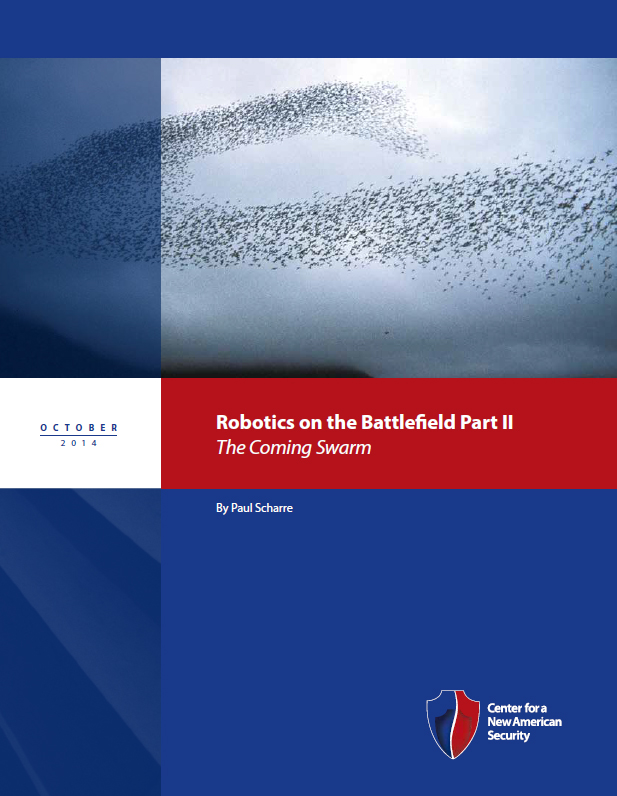
Paul Scharre - Robotics On The Battlefield (2014-2015):


Part 01 (Range, Persistence and Daring)


Part 02 (The Coming Swarm)


Summary


The U.S. military’s conventional superiority is eroding. Anti-access weapons threaten traditional modes of U.S. power projection, and non-state nactors are acquiring advanced technologies that will increase their lethal capabilities. On its current trajectory, the U.S. military faces a future in which its freedom of maneuver will be curtailed and where precision strike weapons from state and non-state actors will make the operating environment increasingly hazardous and lethal. Uninhabited and autonomous systems have enormous untapped potential to help the U.S. military address these challenges. Because of their increased endurance and ability to take risk without placing human lives in danger, uninhabited and autonomous systems can give the military greater reach and persistence into denied areas and can enable more daring concepts of operation. 

Uninhabited systems have been used to great effect in current operations but are still in their infancy in terms of their full potential. Like the tank and aircraft at the end of World War I, their use to date has been limited to niche roles, but they have tremendous
potential in future conflicts. Cultural and bureaucratic obstacles within the Department of Defense (DOD) are limiting development, however. 

Just as the Navy initially resisted the transition from sail to steam-powered ships and elements of the Army dismissed air power and fought against the shift from horses to tanks, some parts of the military continue to resist the expansion of uninhabited systems into traditional combat roles. As a result, the DOD is failing to invest in game-changing technology that could increase efficiencies and save lives. Strong department leadership will be required to overcome these obstacles and ensure that DOD is investing today in these vital capabilities to counter future threats.


Alexander King -  The Future as an Academic Discipline (1975)


Summary


This chapter contains section titled:

  • Reasons for the New Interest in the Future

  • Categories of Futures Studies

  • The Futures Approach in Science and Technology

  • The Institution of Futures Studies

  • Is Futures Research a Suitable Subject for Academia?

  • Are Disciplines Really Necessary?

  • Discussion

  • References Cited