Untitled


Jacques Attali - Europe on the world stage in the 21st century (1993)


Info


Jacques Attali was born in France in 1943. He studied at the Ecole Polytechnique, the Ecole des Mines, the Institut d’Etudes Politiques and the Ecole Nationale de l’Administration. In 1972, Attali received a PhD in economics from the University Paris Dauphine. He then taught economic theory at the Ecole Polytechnique, the Ecole des Ponts et Chaussées and the University of Paris-Dauphine.

In 1973, Attali directed François Mitterrand's unsuccessful presidential political campaign and then became his main chief of staff in the opposition. In 1981, Mitterrand was elected President and named Attali as his special adviser.

Attali co-founded the international NGO Action Contre la Faim in 1979 and in 1980 he founded Eurêka, the European technology focused programme. In 1989, he launched an international programme of action against the disastrous floods in Bangladesh. Attali also advised the Secretary General of the United Nations on the risks of nuclear proliferation.

In 1991, Attali became the founder and first President of the European Bank for Reconstruction and Development in London. He is currently CEO of A&A, an international consulting firm in strategy, based in Paris, and President of Positive Planet, an international non-profit organisation assisting microfinance institutions all over the world.

Attali delivered the Beatty Lecture on March 5, 1993 titled "Europe on the World Stage in the Twenty-First Century".



Carl Gustav Jung - Aion: Researches into the phenomenology of the self (1951)


Description


Aion is one of a number of major works that Jung wrote during his seventies that were concerned with the relations between psychology, alchemy and religion.

He is particularly concerned in this volume with the rise of Christianity and with the figure of Christ. He explores how Christianity came about when it did, the importance of the figure of Christ and the identification of the figure of Christ with the archetype of the Self. A matter of special importance to Jung in his seventies - the problem of opposites, particularly good and evil - is further discussed and the importance of the symbolism of the fish, which recurs as a symbol of both Christ and the devil, is examined.

As a study of the archetype of the self, Aion complements The Archetypes and the Collective Unconscious, which is also published in paperback.


Paul Scharre - Robotics On The Battlefield (2014-2015):


Part 01 (Range, Persistence and Daring)


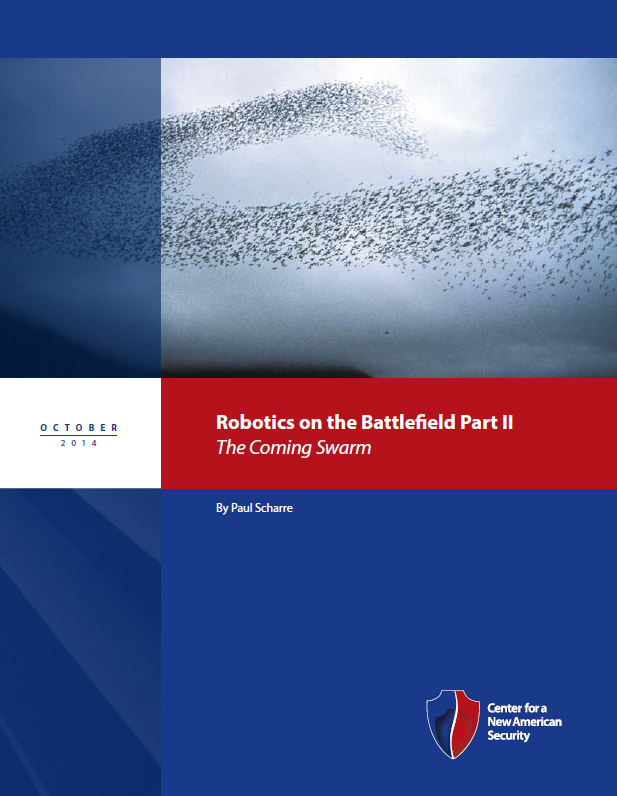
Part 02 (The Coming Swarm)


Summary


The U.S. military’s conventional superiority is eroding. Anti-access weapons threaten traditional modes of U.S. power projection, and non-state nactors are acquiring advanced technologies that will increase their lethal capabilities. On its current trajectory, the U.S. military faces a future in which its freedom of maneuver will be curtailed and where precision strike weapons from state and non-state actors will make the operating environment increasingly hazardous and lethal. Uninhabited and autonomous systems have enormous untapped potential to help the U.S. military address these challenges. Because of their increased endurance and ability to take risk without placing human lives in danger, uninhabited and autonomous systems can give the military greater reach and persistence into denied areas and can enable more daring concepts of operation. 

Uninhabited systems have been used to great effect in current operations but are still in their infancy in terms of their full potential. Like the tank and aircraft at the end of World War I, their use to date has been limited to niche roles, but they have tremendous
potential in future conflicts. Cultural and bureaucratic obstacles within the Department of Defense (DOD) are limiting development, however. 

Just as the Navy initially resisted the transition from sail to steam-powered ships and elements of the Army dismissed air power and fought against the shift from horses to tanks, some parts of the military continue to resist the expansion of uninhabited systems into traditional combat roles. As a result, the DOD is failing to invest in game-changing technology that could increase efficiencies and save lives. Strong department leadership will be required to overcome these obstacles and ensure that DOD is investing today in these vital capabilities to counter future threats.


Alexander King -  The Future as an Academic Discipline (1975)


Summary


This chapter contains section titled:

  • Reasons for the New Interest in the Future

  • Categories of Futures Studies

  • The Futures Approach in Science and Technology

  • The Institution of Futures Studies

  • Is Futures Research a Suitable Subject for Academia?

  • Are Disciplines Really Necessary?

  • Discussion

  • References Cited


Harrison Brown - Nuclear Arms and the Orwellian World (1984)


Abstract


If present trends continue, the emergence of an Orwellian world is certainly plausible. Today we see manifestations of that world appearing in many parts of our globe, including the United States. In an era of hydrogen bombs and microchips new powers have been placed in the hands of those who want to rule absolutely.

Of paramount importance is that the United States and the Soviet Union find themselves locked in an arms race, which has gone for nearly 40 years and has grown to enormous proportions. We have passed the point where the victims of an all-out war would be primarily from the warring countries. Indeed, it now appears that the victims of a major nuclear exchange might number 4 billion persons who would primarily be the residents of the developing countries of the Northern Hemisphere.

This new element of nuclear confrontation suggests that in the absence of a substantial program of nuclear disarmament we can expect a major upsurge of sabotage and terrorism in the more technologically advanced societies. Measures taken to counteract such developments will almost certainly lead to greatly increased government controls over the activities and the thoughts of people.


Carroll Quigley - The Evolution of Civilizations: An Introduction to Historical Analysis (1979)


Info


Carroll Quigley was a legendary teacher at the Georgetown School of Foreign Service. His course on the history of civilization was extraordinary in its scope and in its impact on students

Like the course, The Evolution of Civilizations is a comprehensive and perceptive look at the factors behind the rise and fall of civilizations. Quigley examines the application of scientific method to the social sciences, then establishes his historical hypotheses. He poses a division of culture into six levels from the abstract to the more concrete. He then tests those hypotheses by a detailed analysis of five major civilizations: the Mesopotamian, the Canaanite, the Minoan, the classical, and the Western.

Quigley defines a civilization as “a producing society with an instrument of expansion.” A civilization’s decline is not inevitable but occurs when its instrument of expansion is transformed into an institution—that is, when social arrangements that meet real social needs are transformed into social institutions serving their own purposes regardless of real social needs.


Wendell Bell - The Sociology of the Future (1971)


Info


Concerns itself with the future of sociology, and of all social science. The thirteen authors―among them Wendell Bell, Kai T. Erikson, Scott Greer, Robert Boguslaw, James Mau, and Ivar Oxaal―are oriented toward a redefinition of the role of the social scientist as advisor to policymakers and administrators in all major areas of social concern, for the purpose of studying and shaping the future. This book contains research strategies for such "futurologistic" study, theories on its merits and dangers, as well as an annotated bibliography of social science studies of the future.


Marshall McLuhan - Wikipedia


Marshall Mcluhan - Education in the Electronic Age (1970)


Information


The following article is an address delivered by Dr. McLuhan on January 19, 1967 to the Provincial Committee on the Aims and Objectives of Education in the Schools of Ontario.


Natasha Vita-More - The New Genre -- Primo Posthuman (2005)


Introduction


Many trends never catch on. They remain thoughts without a future. It is a lexicon of culture that takes hold and finds its way across generations and circumstances. Thus is the story of human nature, as it is
diced and sliced over the millennia by theoreticians, philosophers, artists and scholars. With theories tripping effortlessly onto blank slates, the cyclic changes of social progress move proudly forward and humbly backward judging our passions—the causes and effects of existence.
 

Human nature and its metaphorical attribution toward the evolution of humanity play a leading role in the identity of society. Worn like a badge reflecting how we see ourselves, our nature prescribes what we want others to see in us as well. Humans have gone so far as to impose on human nature, that they have even written a treatise to its cause. Hume (1739) Others develop new biosocial fields advancing the methodological investigation of biology and society which underlie human behavior. One thing can be certain, no matter the erudition invested in capturing its essence human nature changes over time, as will the image of how we see ourselves.


Vance Packard - The Naked Society (1964)


Abstract


Originally published in 1964, The Naked Society was the first book to discuss how then-new technologies such as hidden microphones, concealed cameras, modern filing systems, and the polygraph lie detector could be used by government, employers, stores, credit bureaus, security personnel, and other officials to invade our civil liberties. Such activity, which represented the most flagrant of the many assaults upon individual rights, was only part of Vance Packard's truly shocking book, which also considered the ominous implications of loyalty investigations, passport and travel restrictions, and overzealous police actions. In the end, according to Packard, new technologies, manipulated by government and business, were eroding our freedoms, creating a world akin to something out of George Orwell's 1984.

Timelier than ever in today's world, where our civil liberties are under constant threat from technology and the actions of government and business, this all new edition of The Naked Society features an introduction by noted historian Rick Perlstein. 


Waste Makers by Vance Packard - 1963


Vance Packard - The Wastemakers (1960)


Info


An exposé of "the systematic attempt of business to make us wasteful, debt-ridden, permanently discontented individuals," The Waste Makers is Vance Packard's pioneering 1960 work on how the rapid growth of disposable consumer goods was degrading the environmental, financial, and spiritual character of American society.

The Waste Makers was the first book to probe the increasing commercialization of American life—the development of consumption for consumption's sake. Packard outlines the ways manufacturers and advertisers persuade consumers to buy things they don't need and didn't know they wanted, including the two-of-a-kind of everything syndrome—"two refrigerators in every home"—and appeals to purchase something because it is more expensive, or because it is painted in a new color. The book also brought attention to the concept of planned obsolescence, in which a "death date" is built into products so that they wear out quickly and need to be replaced. By manipulating the public into mindless consumerism, Packard believed that business was making us "more wasteful, imprudent, and carefree in our consuming habits," which was using up our natural resources at an alarming rate.

A prescient book that predicted the rise of American consumer culture, this all new edition of The Waste Makers features an introduction by best-selling author Bill McKibben.

Vance Packard (1914-1996) was an American journalist, social critic, and best-selling author. Among his other books were The Hidden Persuaders, about how advertisers use psychological methods to get people to buy the products they sell; The Status Seekers, which describes American social stratification and behavior; and The Naked Society, about the threats to privacy posed by new technologies.


Jonas Salk - The World we Will Live In (date unknown)


Introduction


Every sentient human being is aware of the dangers as well as of the opportunities that now confront man. He is also aware of the pressure of forces within himself and the pressure of forces around him. Caught between his inner world and the outer world, he feels dissonant more often than consonant. He feels stress, longing, and frustration. His soul feels weary, and he yearns to find, and to express, the meaning of his life. Some among the most “successful,’’ and many in the midst of “great riches,” appear to hope for something else. Science and technology are indicted by some as the cause of this malaise, and some even recommend antiscience and antitechnology remedies. However, in the absence of a true understanding of the current syndrome, it is unwise to ascribe the causative role to something that may not be the cause or to prescribe as a remedy the elimination of something that could even help in the development of remedies. Although science and technology are unlikely as a cause they are, nevertheless, a force with which man must cope.


Gerald Leach - The Biocrats (1970)


Joseph F. Coates - Crime. Science & Technology (1967)


Introduction


The next decade may see the systematic application of science and technology as a dominant theme in law enforcement and the administration of criminal justice. Progress seems imminent on every front. The application of systems science, operations research, and contemporary economic techniques may restructure approaches and develop criteria to assess progress and guide the efficient organization and effective study of the criminal justice system. On the more technological level, new opportunities are increasing for the prevention and detection of crime and the apprehension, correction, and rehabilitation of the criminal. Technology applicable to police operations (especially computers, communications, transportation, and nonlethal weapons) is creating major opportunities for increased efficiency and effectiveness in day-to-day law enforcement.


Paul & Anne Ehrlich - Population, Resources, Environment: Issues in Human Ecology (1970)


Content


1 The Crisis 

2 Numbers of People 

3 Population Structure and Projection 

4 The Limits of the Earth 

5 Food Production 

6 Environmental Threats to Man 

7 Ecosystems in Jeopardy 

8 Optimum Population and Human Biology 

9 Birth Control 

10 Family Planning and Population Control 

11 Social, Political, and Economic Change 

12 The International Scene 

13 Conclusions About This Book


Carnegie Endowment for International Peace - International Strategy to Better Protect the Financial System Against Cyber Threats (2020)


Introduction


In April 2020, the Financial Stability Board (FSB) cautioned that “cyber incidents pose a threat to the stability of the global financial system.” The FSB went on to warn that the last few years have seen “a number of major cyber incidents that have significantly impacted financial institutions and the ecosystems in which they operate. A major cyber incident, if not properly contained, could seriously disrupt financial systems, including critical financial infrastructure, leading to broader financial stability implications.”18 The potential economic costs of such events can be immense and the damage to public trust and confidence significant. Cyber incidents could potentially undermine the integrity of global financial markets;19 equally important, the exploitation of cyber vulnerabilities could cause losses to investors and the general public. Central to the risk is the fact that the global financial system is a complex adaptive system. It is resilient and able to absorb most of the shocks that regularly occur, but its complexity also means that large shocks, although rare, can quickly ripple in unpredictable ways. The system’s complexity also makes it impossible to predict exactly when or how such systemic shocks will occur.20 But one thing is clear: it is not a question of if a major incident will happen, but when.


Zbigniew Brzezinski - A Geostrategy for Eurasia (1997)


Introduction


Seventy-five years ago, when the first issue of Foreign Affairs saw the light of day, the United States was a self-isolated Western hemi spheric power, sporadically involved in the affairs of Europe and Asia. World War II and the ensuing Cold War compelled the United States to develop a sustained commitment to Western Europe and the Far East. Americas emergence as the sole global superpower now makes an integrated and comprehensive strategy for Eurasia imperative. Eurasia is home to most of the world s politically assertive and dynamic states. All the historical pretenders to global power originated in Eurasia. The world s most populous aspirants to regional hegemony, China and India, are in Eurasia, as are all the potential political or economic challengers to American primacy. After the United States, the next six largest economies and military spenders are there, as are all but one of the world s overt nuclear powers, and all but one of the covert ones. Eurasia accounts for 75 percent of the world s population, 60 per cent of its GNP, and 75 percent of its energy resources. Collectively, Eurasia's potential power overshadows even Americas.


John Rawlings Rees - Shaping of Psychiatry by War (1945)


Info


The Salmon Lectures, delivered by the consulting psychiatrist to the British Army and Medical Director of the Tavistock Clinic, compose this volume. The author's extensive experience with psychiatry during World War I as well as in World War II makes it the expression of mellowed observation and judgment.

The book really consists of a series of brief essays on a great variety of topics, which represent the innumerable links of psychiatry to the problems of military and social life in almost all their aspects. This diversity makes it impossible to present an adequate summary of the book. It deals with all the activities of a psychiatrist in the services. The author points out that 'the friendly running fight against opposition' is, of itself, stimulating, and that, 'for most psychiatrists army service provides a new angle to their job and the art of psychiatry itself becomes dynamic'.

As to treatment, the author is not yet sure whether methods have developed very much. In spite of the use of sedation, narcoanalysis, and modified insulin therapy, returns to duty are no greater than during the last war, although possibly long term results may be better.

The author points out the need for recognizing the dull man with a low I.Q. and assigning him to appropriate duties. He emphasizes the necessity for giving as much attention to the mental as to the physical health of the potential officer. An excellent series of points on leadership and morale is included.


Jean Baudrillard - Hyperreal America (1993)


Abstract


May 1968 in Paris was a utopian revolt which failed; America is a utopia which has been achieved. It is the original version of modernity. This article examines the logic of Biosphere 2 a miniature version of the entire planet, but which means the society is already living with the prospect of a catastrophe affecting its utopia, it is a zoological museum in anticipation of its own destruction.


Alice A. Bailey - The Externalization of the Hierarchy (1957)


Info


The subject of human free will has always contrived to set men's mental teeth on edge. The fatalist automatically resigns himself to whatever befalls him, seeing in effects no cause attributable to his own action - or inaction; but resigned always to the working of an inexorable fate.

The Christian counterpart tends to accept his lot as the working of God's Will in which he has no say or part. At the other extreme stands the rebellious independent, determined to exercise his right to free, self-willed action.

This book, as one of its many values, shows the extent to which Hierarchy and other centres of life on the planet are dependent upon the unpredictable and often irresponsible factor of human free will. During the years leading up to the outbreak of World War II, every opportunity and every possible spiritual stimulation was offered to humanity in an effort to avoid precipitation of conflict on to the physical plane. Disciples and aspirants to discipleship were asked to give special cooperation to the Hierarchy, and to make an all-out effort to provide adequate leadership to human thought and decision. All were left free, however, to determine their own limits, if any, and to decide their own actions. According to law, the Hierarchy - even at danger point - could not infringe human free will and dictate or impose a course of action based on their own deeper knowledge and more profound insight.

Many of the spiritual factors surrounding the period of human history from 1919 to 1949 are presented in this book. The energies at work behind the world scene are shown; and the identity revealed of certain great Beings magnetically attracted in service towards this planet at a climaxing moment in the evolution of our planetary life.

These factors are an aid to our understanding of the interrelated energy patterns within the universe which operate according to law. But essentially they provide the esotericist with knowledge of available energy flow responding to planetary purpose and plan which can be contacted and given conscious and intelligent cooperation, particularly by those in whom the selfish, self-centred will has been transcended so that the spiritual will can be given more adequate expression. Some of these energy factors are particularly clear in the special "Messages" given over a period of many years at the time of the Festivals of Easter, Wesak and the Christ.

Many aspects of Hierarchical work, thought and planning are discussed in these Messages, with the Hierarchical effect shown of planetary evolution and initiation and its reflection into humanity. This achieved a climax at the time of the three Festivals in 1945, when a momentous decision was taken involving, among other results, the eventual externalisation of the Hierarchy and the reappearance of the Christ.

The final section of the book discusses the "Stages in the Externalisation of the Hierarchy". It is often difficult for the human mind to imagine the problems facing those liberated from the restrictions of form. It is even more difficult to contemplate the effects in those so liberated of a free choice to reassume such a limitation.

So we are helped to understand what the interdependence of life on this planet really signifies in terms of love, sacrifice and service by the part to the needs of the whole.


George Bernard Shaw - The Population Question (1928)


Introduction 


Historically, socialist writings on population problems have exhibited a curious ambivalence. On the one hand, there has been an inclination flatly to deny that such problems exist at all. For a socialist society "the most precious asset is people.'" In capitalist societies talk about population problems is a cynical tactic by reactionaries aimed at diverting attention from the real problems of exploitation and class conflict. On the other hand, at least the abstract possibility of demographic growth generating economic hardship has often been acknowledged by socialist writers, coupled with the argument that if such problems are real only a socialist society will be able to resolve them. The pronouncements on population of the Irish playwright and critic George Bernard Shaw (1856-1950), who was an ardent socialist of the Fabian variety, exhibit this ambivalence fully, the more so as Shaw's pellucid style is in happy contrast to the turgid theorizing characteristic of much of the earlier literature expounding socialist views on the subject. Reproduced below are passages from Shaw's most sustained discussion of political economy, The Intelligent Woman's Guide to Socialism, Capitalism, Sovietism and Fascism, a treatise of over 500 pages that first appeared in 1928. (The passages are from Chapters 25 and 80.) If Shaw's usual penchant for the iconoclastic pose-at times for sheer entertainment's sake-is evident also in his discussion of population problems, this flaw is amply compensated by numerous insights and critical points that after 55 years still retain their relevance and cutting edge.


Bo Gräslund - Early Humans and Their World (2005)


Abstract


Summarizing modern research on early hominid evolution from the apes six million years ago to the emergence of modern humans, this book is the first to present a synthetic discussion of many aspects of early human life. 


Arthur Koestler - Less equal than others (1974)


Introduction


When Professor H. J. Eysenck was beaten up by a bunch of nitwits at the London School of Economics some time ago, he roused a wave of sympathy even among those scholars who disagree with his ideas. This book (see below) will predictably lose him much of that sympathy. Not on the grounds on which the L.S.E. gang attacked him: to call Hans Eysenck a Fascist or a 'reactionary' is simply laughable, and race is not even discussed in the book. It is nevertheless a book with a potentially harmful effect on psychology students, educationists and even politicians, who might take Eysenck's controversial interpretations of ambiguous statistics as the ultimate scientific truth about human nature. His thesis is, briefly, that intelligence is 80 per cent determined by heredity, which leaves only a small, 20-per-cent margin where environmental factors, including education, can exert their influence on child or adult. This puts man into a universe where genetic predestination rules almost supreme — where, in the words of the Koran, every man's destiny is fastened round his neck.


Kermit Roosevelt - Progress In This Age Of Science (1935)


Introduction


Those of us who spent our days of childhood in the 1890's have seen many and miraculous changes in this world. Even the elastic imagination of a child would have to be stretched beyond all bounds, if asked to vision in the guise of anything but fairy tales many inventions which we now regard as commonplace, such as the radio and television and the transatlantic telephone.


Jerome C. Glenn & Theodore J. Gordon - Issues and Opportunities for the Future (1998)


Abstract


This issue presents the distillation of views of approximately 250 participants from around the world who have contributed their judgments about the state of the future. A total of 180 developments were identified and rated that could evolve over the foreseeable future to significantly improve the human condition. These were clustered into 15 global opportunities with suggested actions that might be useful in achieving the opportunities. The effectiveness of these actions was judged by policy makers and advisors. The relationships and impacts of the 15 global issues from last year’s report and the 15 global opportunities in this year’s report are included. Lessons and questions from history were also identified and rated for value in futures research. Global exploratory scenarios from the first year of the Project were extended by judgments of Project participants, quantitative global models, and “lessons of history.” Results of a global participatory process to produce global normative scenario sketches are also included. Ó 1998 American Council for the United Nations University.


C.D. Darlington - The evolution of man and society (1969)


Info


Evolutionary history of human societies. Covers Ancient Egypt and Persia, the development of agriculture, and the influence of religions.


Herman Kahn - How Many Can Be Saved (1959)


Introduction


The general belief persists today that an all-out thermonuclear war would inevitably result in mutual annihilation, and that nothing can be done to make it otherwise. Even those who do not believe in total annihilation often do believe that the shock effect of the casualties, the immediate destruction of wealth, and the long-term deleterious effects of fallout would inevitably jeopardize the survival of civilization. A study recently carried out by the author and a number of his colleagues at RAND, and privately financed by The RAND Corporation, has reached conclusions that seriously question these beliefs.1 While a thermonuclear war would be a catastrophe-in some ways an unprecedented catastrophe-it would still be a limited catastrophe. Even more important, the limits on the magnitude of the catastrophe might be sharply dependent on what prewar measures had been taken. The study suggests that for the next ten or fifteen years, and perhaps for much longer, feasible combinations of military and nonmilitary defense measures can come pretty close to preserving a reasonable semblance of our prewar society.


Kurt Lewin - Frontiers in Group Dynamics: Concept, Method and Reality in Social Science; Social Equilibria and Social Change (1947)


Info


Published by SAGE, on behalf of The Tavistock Institute.


Michael A. Aquino - "Project Star Gate": $20 Million Up in Smoke (and Mirrors) (2000)


Info


/ 


Judith Rodin & Margot Brandenburg - The Power of Impact Investing: Putting Markets to Work for Profit and Global Good (2014)


Info


“Impact investing can be a powerful instrument of change.”
—Judith Rodin, President, The Rockefeller Foundation, and Margot Brandenburg, in the introduction

A new wave of investors is using impact investing to address some of the greatest challenges of our time—from climate change and water scarcity to lack of access to health care, education, and affordable housing—with the intention of also generating a financial return.

This couldn’t happen at a more critical time. While philanthropy continues to be a transformative force for good, global philanthropic funds, even when combined with the development or aid budgets of many national governments, add up to mere billions of dollars. Meanwhile, the cost of solving the world’s problems runs into the trillions.

In
The Power of Impact Investing, Rockefeller Foundation president Judith Rodin and Margot Brandenburg, two of the foremost experts in the field, explain what impact investing is, how it compares to philanthropy and traditional investments, where opportunities are evolving around the world, and how to get started.

By sharing moving stories of impact investors and the exciting social enterprises benefiting from these investments, Rodin and Brandenburg offer a compelling resource for anyone interested in better understanding the power of impact investing—including retail investors, high-net-worth individuals, and heads of family offices, foundations, banks, and pension funds—while also offering experienced impact investors an opportunity to deepen their knowledge and benefit from the perspectives of other investors.


Roberto Manzocco - Transhumanism: Engineering the Human Condition - History, Philosophy and Current Status (2019)


About this book


This book is designed to offer a comprehensive high-level introduction to transhumanism, an international political and cultural movement that aims to produce a “paradigm shift” in our ethical and political understanding of human evolution. Transhumanist thinkers want the human species to take the course of evolution into its own hands, using advanced technologies currently under development – such as robotics, artificial intelligence, biotechnology, cognitive neurosciences, and nanotechnology – to overcome our present physical and mental limitations, improve our intelligence beyond the current maximum achievable level, acquire skills that are currently the preserve of other species, abolish involuntary aging and death, and ultimately achieve a post-human level of existence. The book covers transhumanism from a historical, philosophical, and scientific viewpoint, tracing its cultural roots, discussing the main philosophical, epistemological, and ethical issues, and reviewing the state of the art in scientific research on the topics of most interest to transhumanists. The writing style is clear and accessible for the general reader, but the book will also appeal to graduate and undergraduate students.


Alvin & Heidi Toffler - Global Gladiators Challenge the Power of Nations (2000)


Introduction


"The process under way now is as historically significant as the 30 Years War that ended in 1648 with the Treaty of Westphalia, which laid the diplomatic groundwork for the now fading world order built around supposedly sovereign nation states."


TRADOC Mad Scientist Initiative - Visioning the Future of Warfare: 2030-2050 (U.S. Army, 2016)


Info


In November 2016, Mad Scientist launched its first Science Fiction Writing Competition with the topic “Warfare in 2030 to 2050.” We sought out unconventional thinkers and solicited their unique perspectives — we were not disappointed! With over 150 submissions from authors in 10 different countries around the globe, the diversity of input provided us with a wide variety of thoughts and ideas about warfare and the Future Operational Environment. Through the art of Story Telling, the Army was able to visualize the known, probable, and possible challenges and opportunities that the future holds.


Aurelio Peccei - The Human Quality (1977)


Description


An autobiographical statement of the author's belief in the global approach to development and world problems. How can the human species survive the crisis of its own extraordinary techno-scientific success? In this truly unique book Aurelio Peccei shows us that the solution cannot be found in external factors. It must lie in re-establishing a sound cultural balance within man himself so that he becomes capable of living in harmony with the new human condition and changed world environment. Only by a cultural revolution which changes the human quality can we control and orient the material revolutions. Aurelio Peccei's distinguished career in industry, conservation, international affairs and as a counsellor on major world problems needs little introduction. He was a founder-member of the Club of Rome in 1968 and has been a member of its Executive Committee ever since. Inevitably he draws upon his wisdom and experience to highlight the arguments in his book.


Aldous Huxley - A Positive Program of Research for Peace (1947)


Introduction


The military are "intruding" into science, because they hope that an increase in knowledge will lead to the development of more effective weapons. Scientists are advised by Dr. Ridenour to "resist intrusion"
to the extent that it threatens to degrade pure science into mere engineering by ProfessorWiener, they are advised to resist it absolutely and unequivocally, on moral grounds. This negative procedure of "resistance to intrusion" requires, it seems to me, to be upplemented by some form of positive action, designed to offsett he military program of research for war, and to render it unnecessary.


Alexander King - Education and Change (1956)


Info on Alexander King


Alexander King, who has died aged 98, was a pioneering scientist who warned of the dangers to the environment from extensive industrial development. He was one of the people who commissioned the 1972 Limits to Growth report, which triggered the first wave of international concern about the environment. This remains one of the world's largest selling books on the environment. He then became one of the founders of the international thinktank, the Club of Rome, which the Duke of Edinburgh has called the "conscience of the world".